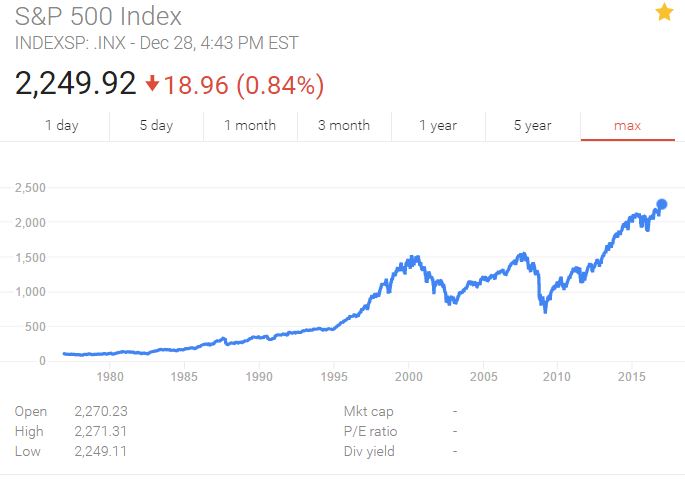
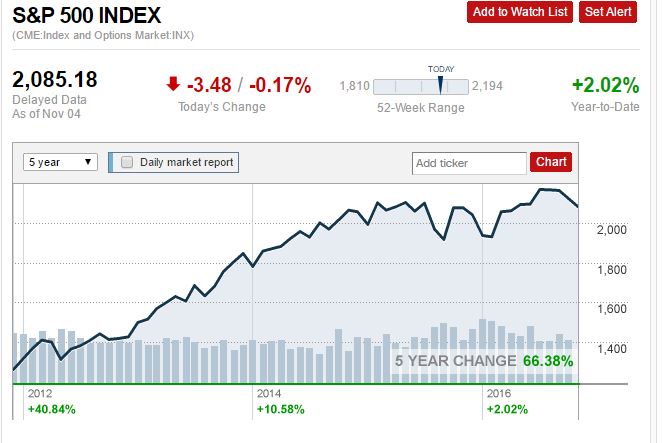
My DFC Fund is now $10,419.79. In March, I made a contribution of $460.00 to the fund. Below, I have included some car options that are around $10,750. Also, I have included a graph showing the performance of the SP500 as of March 25th.
Blog postings on the following topics or ideas - Drive Free Cars, Money, Investing, Rental Property, Wealth, School, and Health.
Saturday, March 25, 2017
Thursday, February 23, 2017
Thursday, January 26, 2017
Acronyms
DFC – Drive Free Cars
Sunday, January 8, 2017
Rethinking diet
In 1996 as a teenager I was becoming increasingly sick. I had blood in my stool nearly daily and uncontrollable fevers and chills. And I had lost my Appetite and would try to sleep all day. A few days after my 16th birthday, my parents took to a doctor because of a high fever and these symptoms. During, the checkup I passed out. I awoke in a hospital bed with medical professionals attempting to lower my fever. I ended up staying in the hospital for over a month. I was officially diagnosed with Crohn's Disease and put on a liquid diet of chicken and beef broth for about a month. The doctor’s prescribed a ton of medicine for me. However, the systems for Crohn’s didn’t disappear. I still had bleeding and outbursts of fevers.
I battled Crohn’s through my undergrad with medicine after medicine. I ate mostly bread and meats - but avoided veggies based on the recommendation of a doctor. I felt like crap most of the time. My immune system was weak because of the drugs.
In 2004 I came across a book on the specific carbohydrate diet that provided a diet that would alleviate the symptoms of my Crohn's disease. It removed complex sugars, e.g., refined sugars, bread, and pasta, from my diet which would kill off the bad bacteria that was assumed to be the underlying cause of my disease. The diet worked well. I was able to come off of my medicines. And my inflammation in the intestines, a symptom of Crohn's disease, decreased. I felt great and was easy for me to follow. However, I returned to eating ‘regular’ food around 2009. And I barely had any Crohn's symptoms or major reactions. Little to no fevers or blood in the stool. Life is good. Right?
Well, before changing my diet from SCD to more ‘normal’ diet, I weighed around 165 lbs. Within the first year of returning to the ‘normal’ high sugar diet, I gained about 10-15 lbs of weight, likely all fat. Then in 2010, I crossed the 200 lbs mark - wow! My waist had gained 5 inches over two years! Over 2010 to 2012, my weight hovered around 190 - 210 lbs. Then when I started law school in 2012 I ate bread and sugary snacks all the time - I had too I thought, there were no other options. Really, I just craved those foods. By 2016, I reached 225 lbs.
Then over summer, I was researching ways to lower blood pressure, and I came across intermittent fasting. I tried it right away, and within the first 40 days, I was down 20 lbs! I have continued to intermittent fast, over 180 days now, and my weight fluctuates around 190 lbs. But, I am still eating the high sugar foods - bread and pasta. Can I do more?
Yes, I can. This year, I plan to try out a Ketogenic diet – high fat and low carb eating. The main reasons for my decision, are the number benefits from this diet. Such as more energy, reduction of inflammation, clearer thinking, and better mood stabilization (e.g., serotonin and dopamine levels are optimized)
Source: http://www.ketogenic-diet-resource.com/ketogenic-diet-benefits.html
Friday, January 6, 2017
My cognitive strategy - a habit of ‘positive’ visualization and thinking patterns.
One has a better probability of achieving success through mental preparation - a positive belief or image of achieving success. In 1992, several researchers interviewed various members of the U.S. Olympic team to determine their pre-competition preparation. The research indicated that those who had the best outcomes followed a strict mental preparation plan of total focus on seeing their own success, building confidence, and visualizing routes to achieve high performance. Ultimately had higher probabilities in winning. However, those who had the worst outcomes were not confident in their preparation plans and often had thoughts on failure. The conclusion was that pre-competitive states (positive or negative thoughts) play a critical role in competitive performance. Thus, like the Little Blue Engine, who said “I think I can, I think I can” and climbed that big mountain, we can become high achievers by our own positive visualization and thoughts. The methodology for this cognitive strategy is easy as 1, 2, and 3.
- Recognition of the challenging situation - for example, doing 100 pull-ups; or becoming a millionaire
- Use of affirmations and visualization to see your own ability to execute a target behavior for achieving those results - tell yourself you can do the pull-ups and then see yourself doing 100 pull-ups; or tell yourself you can be a millionaire and then see yourself investing and watching your net worth grow)
- the resulting performance - now, actually doing the pull-ups or investing.
Takeaways:
- Use self-dialog, tell-yourself that you can achieve. Often referred to as affirmations in ‘pop’ psychology.
- Use mental imagery - the imagined results of behavior and success - before you actually perform. Often referred to as visualization in ‘pop’ psychology.
- Avoid or replace your distorted beliefs and assumptions that may be the basis of your dysfunctional thought processes.
In the future, I plan to investigate and discuss the brain’s chemical responses to affirmations and visualization.
Tuesday, January 3, 2017
Over the weekend, motivated after watching the minimalists, I went through my closet and donated nearly one hundred clothing items -- yet, I still have excess clothing.
My underlying motivation dealt with the value of clothing and space. First, clothing has a relatively low value -- e.g., the cost to replace an item is trivial -- Second, clutter-free space has high value added -- it feels great not to have clothes cluttering my room and closet.
Further, I decided to create a fund that would allow me to replace clothing as needed. The goal is to have the interest generated by the principal investment pay for all my clothes. And, this system should be faster to implement than my drive free cars fund. I moved $100 from my drive free cars fund (DFC) and created a new fund, the Free Clothes Fund (FCF).
At the outset, I'm not sure exactly how much money I will need to buy clothes per year because depends on where I shop. But I would like to have enough money in the fund to know that I could purchase clothing as needed or desired. Watch for more on the FCF fund. Below are some options I found on eBay showing how cheap a replacement suit is.
Thursday, December 29, 2016
Saturday, November 19, 2016
Sunday, November 6, 2016
Monday, September 26, 2016
The DFC Fund is now $7,636.50. I made a surprise contribution
of $460.00 to my DFC Fund for September – I had thought I turned off automatic investments.
Below, I have included some for-sale car
options that are around $7500-$8000. In
addition, I have included a graph showing the performance of the SP500 as of September
26th.
Sunday, September 11, 2016
Free Workout – no membership costs, and no equipment costs
The ROI is infinite – no cost, the weight is free, no commuting, and always available. “WHAT IS IT?” you ask. It is bodyweight lifts. We all know of at least a few of them, as our gym instructor in high school accessed our grades based on them. For example, the number of pushups, pullups, dips, and sit-ups were used to gauge our fitness and grade. I vaguely recall struggling with pushups and pullups and being depressed about my performance. At the time, I thought that upper body strength was some innate ability – either you are born with it, or not. Now I know it something that can be achieved through deliberate training.
To summarize, the cool thing about a bodyweight workout is that the weight is always with you, literally. So there is no excuse not to work out. These exercises will end the naysayers that make excuses like, e.g. “I don’t have a gym nearby”, “I can’t afford a membership or weights”, “I don’t have time”, or “I am always traveling.” So let us outline some basis for us to begin the best ROI workout.
First, should I aim for a lot of reps? Probably not. It is better to work on strength rather than endurance. We can use physics to adjust the weight to make the exercise more demanding on the muscle – e.g. pushup (normal), evaluated pushup, one-handed pushup, etc. Second, do I need many exercises? Probably not, just focus on the core movements for building strength. Third, should I workout every day? Probably not. It typically takes a day or more for your body to recover from a strength training routine – typically, most programs have a Monday, Wednesday, and Friday workout, with the others days for rest and recovery. Okay, how many exercises are necessary? Maybe 3 -6 per workout, with 3 sets per exercise. So what are the exercises?
1. Push-ups (builds up chest, triceps, and front delts); handstand pushups (shoulders)
2. Chin-ups & pull-ups (upper back and biceps)
3. Pistol Squats (lower body)
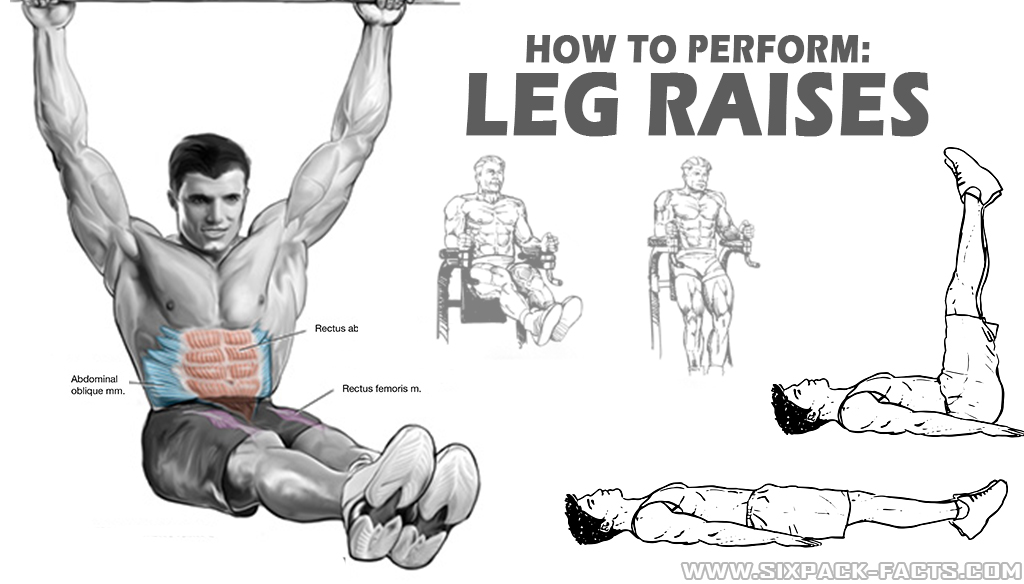
4. Crunches, Hanging Leg Raises, Front Lever Pulls (Abs)
5. L-Sits, and Back Bridges (Back)
Friday, August 19, 2016
The DFC Fund is now $7,256.62. I made a partial car payment of $460.00 to my DFC Fund for August. Below, I have included some for-sale car options that are around $7250-7500. In addition, I have included a graph showing the performance of the SP500 as of August 19th.
One additional note, I am planning to stop contributing to the DFC fund for several months. I will continue to update its growth.
Saturday, August 6, 2016
Wednesday, July 27, 2016
More comments on Health and Wealth!
Is it to late for me?
No, never! Many have reaped
the benefits from working out. For
example, Charles Eugster can attest to the benefits for bodybuilding at 93! He feels great. What would happen if other
joined in, all ages, we would have a significant reduction in chronic diseases,
decreased medical expenditures, and more to invest. Further, our brains would be sharper – for
more info, check out the book “Spark.” Not to mention more time to enjoy those
sweet investment returns with jet-skis, and family trips to the Caribbean or wherever!
Anyways, I drank the Kool-Aid, and I
set up my first gym in the basement. If
I can prove to myself, and my wife, that I am all-in then I will upgrade the
gym in the future from beginner to amateur. So far, I am three-weeks in and 7
days away from developing a habit – the current view is that a habit typically
takes 30 days to form. In these 21 days,
I have dropped 15 pounds of weight and likely 2-4% BF. I plan to invest more
time into learning new exercises and what to eat. I feel that my ROI on this knowledge is
nearly infinite in terms of maximizing the quality of life. I would not want to be a billionaire who is
sick and can’t get out of bed.
Therefore, my health should be the foremost thing in my life. I want to be rich, but more importantly healthy
in order to spend my life with family and friends.
GYM 1 (basement) - Beginner bench, weights, stepper, etc. (all less than $300)
Source:
·
Charles Eugster, “Why bodybuilding at age 93 is
a great idea”,TEDxZurich, <<https://www.youtube.com/watch?v=rGgoCm1hofM>>
·
John Ratey, Spark: The Revolutionary New Science
of Exercise and the Brain, <http://www.goodreads.com/book/show/721609.Spark>
Thursday, July 21, 2016
Monday, July 18, 2016
The Drive Free Car Fund – 1 Year Summary
On July 20, 2015, I began my
experiment to invest the amount of a typical car payment into an investment
account with the purpose of using the fund to pay for a reliable vehicle in the future based solely
on its growth. I began the fund with a deposit
of $613.30, and I planned to invest ~$480 dollars per month over its lifetime.
As of July 18, 2016, I have made the
following deposits:
Date
|
Deposits
|
7/8/2016
|
$460.00
|
6/22/2016
|
$460.00
|
6/8/2016
|
$240.00
|
5/23/2016
|
$240.00
|
5/9/2016
|
$240.00
|
4/22/2016
|
$240.00
|
4/8/2016
|
$240.00
|
3/8/2016
|
$240.00
|
2/8/2016
|
$240.00
|
1/22/2016
|
$240.00
|
1/8/2016
|
$240.00
|
1/8/2016
|
$300.00
|
12/22/2015
|
$240.00
|
12/8/2015
|
$240.00
|
11/23/2015
|
$240.00
|
11/9/2015
|
$240.00
|
10/22/2015
|
$240.00
|
10/8/2015
|
$240.00
|
9/22/2015
|
$240.00
|
9/8/2015
|
$240.00
|
8/24/2015
|
$240.00
|
8/10/2015
|
$240.00
|
7/20/2015
|
$613.30
|
And on June 25th, I
withdrew $1,2460.00 from the fund, making the total contributions at
$5,147.30. The current value of the fund
is $5,736.32. Therefore, theoretically I
could withdraw $589.02 (the Interest) without hurting the principal that I have
invested. The return on the investment
over this period (July 2015 to July 2016) has been 11%.
Below are some vehicle options based
on the value of the Interest only.
Friday, July 15, 2016
Saving Money by Being Healthy!
There is a substantial cost to being unhealthy – e.g. becoming obese based on a sedentary lifestyle can lead to substantial costs in medicine and medical treatments. Currently, I am living a very sedentary lifestyle and packing on weight. Shamefully, I ignore my apparent physical changes and, paint a different picture than then my own reflection in the mirror.
Here comes the wakeup call, the
Center for Disease Control and Prevention (CDC) states “[o]besity is a serious
concern because it is associated with poorer mental health outcomes, reduced
quality of life, and the leading causes of death in the U.S. and worldwide,
including diabetes, heart disease, stroke, and some types of cancer.” And the economic costs to society are
high. In the US, the cost for just
medical care alone for obesity were estimated at $147 billion in 2008 – like over
2x Warren Buffet’s net-worth. Now I know
why health insurance is so expensive! The
American Diabetes Association reports that an individual diagnosed with diabetes
will “incur average medical expenditures of about $13,700 per year, of which
about $7,900 is attributed to diabetes.” That person would be much better off
spending the money on healthy food and exercise equipment to extend his or her
life.
So what can I do? The CDC recommends a “healthy diet pattern
and regular physical activity.” The diet should consist of “whole grains,
fruits, vegetables, lean protein, low-fat and fat-free dairy products and
drinking water.” Although, other
researches such as Dr. Atkins would argue a diet without whole grains and dairy
are better – e.g. a low carb, high protein and fat diet. I have never tolerated breads or milk
extremely well, and I may opt for more veggies and proteins for the diet. Further, in terms of a healthy diet pattern, I
have implemented a intermediate fasting pattern for eating with a 4 – 6 hour
window for feasting, and a 20-18 hour block for fasting. Why?
A Johns Hopkins University researcher,
Dr. Mark Mattson, found that “that the normal … three meals a day plus snacks …
isn’t the healthiest eating pattern.”
Rather, Dr. Mattson determined that “fasting twice a week could
significantly lower the risk of developing both Parkinson’s and Alzheimer’s
disease” because “[c]alorie restriction (CR) extends life span and retards
age-related chronic diseases.” There are
many other studies and individuals who have demonstrated various benefits to an
IF pattern that exceed any benefits to the 3 or 6 meal a day approach.
In summary, I plan to blog about
health in terms of saving money – also, extending my own life to enjoy compound
interest! Currently, using IF alone I
have dropped around 8 lbs. My goal is
188, and currently I am at 210. I will
follow up this blog with my exercise routine – which hasn’t been implemented
yet. I just ordered a bench and weight
set for under $70 dollars. I think this
set up will be a great start on my journey to healthy lifestyle.
Subscribe to:
Posts (Atom)