Blog postings on the following topics or ideas - Drive Free Cars, Money, Investing, Rental Property, Wealth, School, and Health.
Friday, January 29, 2016
Car Fund Update!
I made a partial car payment of $240 to my “Drive Free Cars” (DFC) Fund for January. The total value of my DFC Fund is now $3,547.52. I posted some car options in the $3,500 dollar range below.
Sunday, January 10, 2016
Car Fund Update!
I made a partial car payment of $540 to my “Drive Free Cars” (DFC) Fund for January. The total value of my DFC Fund is now $3,249.04. I posted some car options in the $3250 dollar range below.
SP500
Sunday, December 20, 2015
Car Fund Update!
Sunday, December 6, 2015
Car Fund Update!
I made a partial car payment of $240 to my “Drive Free Cars” (DFC) Fund for December. The total value of my DFC Fund is now $2,741. I posted some car options in the $2750 dollar range below.
SP500
SP500
Saturday, November 28, 2015
Car Fund Update!
I made a partial car payment of $240 to my “Drive Free Cars” (DFC) Fund for November. The total value of my DFC Fund is now $$2,496. I posted some car options in the $2500 dollar range below.
SP500
SP500
Saturday, November 14, 2015
Car Fund Update!
I made a partial car payment of $240 to my “Drive Free Cars”
(DFC) Fund for November. The total value
of my DFC Fund is now $2,174. I posted
some car options in the $2250 dollar range below.
SP500
Wednesday, October 21, 2015
My "Drive Free Cars" Fund Update!
I made a partial car payment of $240 to my “Drive Free Cars” (DFC) Fund for October. The total value of my DFC Fund is now $2,040.35. I posted some car options in the $2000 dollar range below.
Note: the SP500 is coming back up.
Thursday, October 8, 2015
My "Drive Free Cars" Fund Update!
I made a partial car payment of $240 to my “Drive Free Cars”
(DFC) Fund for October. The total value
of my DFC Fund is now $1,820.71. I
posted some car options in the $1800 dollar range below.
Note: the SP500 is coming back up.
Monday, September 21, 2015
Sunday, September 20, 2015
My "Drive Free Cars" Fund Update!
I made a partial car payment to my “Drive Free Cars” Fund
for Sept in the amount of $ 240.00. The
total value of my Car-Fund is now $ 1,533.69.
I believe a reliable car is now in the funds range. I posted some options below.
The S&P is still down.
Monday, September 7, 2015
My "Drive Free Cars" Fund Update!
I made a partial car payment to my Car-Fund for Sept in the amount of $ 240.00. The total value of my Car-Fund is now $ 1,267.81. I doubt that I have many options for a reliable vehicle for around $1.3k. I posted some vehicle options in this range below.
SP 500 (still on sale)
Friday, August 21, 2015
My "Drive Free Cars" Fund Update!
I made a partial car payment to my Car-Fund for August in the amount of $ 240.00.
The total value of my Car-Fund is now $ 1,048.36. I doubt that I have many options for a reliable vehicle for around $1k. May be a motorcycle. I posted some vehicle options in this range below.
After reading the descriptions of these cars, most are mechanic-specials. It appears the stock market is falling (see the S&P figure below), so that means I can grab some good on-sale ETFs this week.
The below table is a snapshot of the ETFs I am currently invested in. Some pay dividends, which I might set up to a do a dividend reinvest option.
An interesting article at Dave Ramsey site discusses what cars the wealthy drive. Would a millionaire choose a Ferrari or Ford?
The total value of my Car-Fund is now $ 1,048.36. I doubt that I have many options for a reliable vehicle for around $1k. May be a motorcycle. I posted some vehicle options in this range below.
After reading the descriptions of these cars, most are mechanic-specials. It appears the stock market is falling (see the S&P figure below), so that means I can grab some good on-sale ETFs this week.
The below table is a snapshot of the ETFs I am currently invested in. Some pay dividends, which I might set up to a do a dividend reinvest option.
| Symbol | Current Value | Quantity |
| IDV ISHARES INTERNATIONAL DIVIDEND ETF | $58.80 | 2 |
| IJR ISHARES CORE S&P SMALL-CAP ETF | $111.22 | 1 |
| IJT ISHARES S&P SMALLCAP GROWTH ETF | $250.70 | 2 |
| ILF ISHARES LATIN AMERICA 40 ETF | $71.73 | 3 |
| ONEQ FIDELITY NASDAQ COMPOSITE INDEX TRACKING STOCK | $185.63 | 1 |
| PFF ISHARES US PREFERRED STOCK ETF | $117.03 | 3 |
| PICK ISHARES MSCI GLOBAL METALS & MINING PRODUCERS ETF | $10.55 | 1 |
| Total Invested in Funds | $805.66 |
An interesting article at Dave Ramsey site discusses what cars the wealthy drive. Would a millionaire choose a Ferrari or Ford?
Wednesday, August 12, 2015
Average Joe's 15 Years on the “Drive Free Cars” Plan
A Story
about Average Joe's car decisions.
In Dec. 1999, average Joe went to the local car dealer and test-drove
several cars. Joe was very impressed
with the ‘new’ Chrysler Town & Country.
The dealer offered to finance the new Town & Country, priced at $30k,
for ONLY $456 per month for the next 6 years.
However, Joe decided not to follow the recent hype of
leasing/financing a car and, instead, bought a ‘used’ 1996 Chrysler Town &
Country with 35k miles for $16K in cash.
Joe decided that he would replace this Town & Country vehicle
in about 5-6 years when the odometer hit 100k miles. So he began to invest $500 per month, or $6,000
per year, into a mutual fund -VFIAX.
How did it work out for Joe?
Well the market was falling in 2001 – 2002, but Joe looked
at this depressed market as ‘On-Sale’. The
Market rebounded, and after 5 years, Joe was ready to sell the Town &
Country and replace it with something ‘newer.’ Joe opened his ‘drive-free cars’ fund's statement
to find a balance of $37K (he had invested $30k and his money had earned $7k in
interest.) See Table Below.
|
Joe decided not to kill his golden goose (the principle),
and took out only the interest earned on the principal. After selling his Town & Country for $11k,
he set out with $18k to buy a used 2002 Lincoln LS. After purchasing the LS, Joe had $30k
remaining in the ‘drive-free cars’ fund.
Joe
continued to contribute $500 per month to this account, and then planned to upgrade from
the LS in five years.
After 5 years of driving the LS, Joe again decided to look
at his ‘drive-free cars’ fund. He opened the account to find $67k in the fund (he had invested $60k and his money had earned $8k in
interest.) See Table Below.
|
After 5 years of driving the BMW, Joe again decided to look
at his ‘drive-free cars’ fund. He opened
to find $174k in the fund (he had invested $90k and his money had earned $84k
in interest.) See Table Below.
|
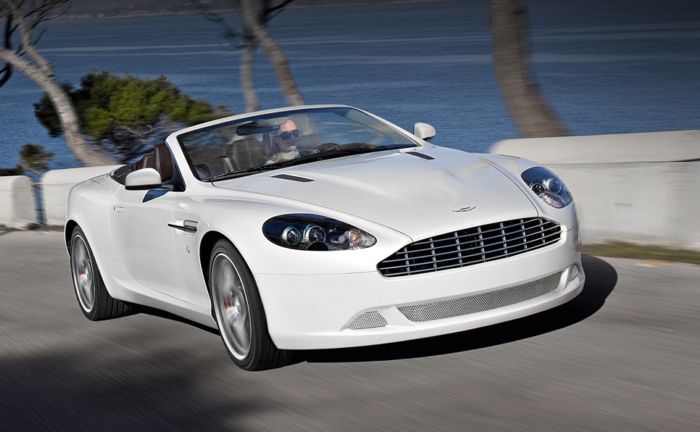
Joe again decided not to kill his golden goose, and took out only the interest earned on the principal. After selling his BMW for $18k, he set out with his $102k to buy a used 2012 Aston Martin DB9 Volante.
Sources
and other reading
Friday, August 7, 2015
My "Drive Free Cars" Fund Update!
Invested a partial car payment for August - $ 240.00
Total Value of Fund - $ 846.72
I think the main thesis of the video is the investing part, take the normal car payment the average person pays, but instead of paying the finance company pay yourself the same payment in a mutual fund that gives you a return. Then, once the fund reaches 20K use only the return to buy your future car for 14k - 18k every five years, assuming market average return of 12 %.
Some Comments Others have made - "Can't Sell a Used Car for what you paid for it"
Regarding the used car, I think Dave also has a point – a cheap car loses VERY little in value compared to a newer car. I have been fortunate to make more than what I have paid in at least three cars –
However, this is likely atypical. I believe on average that a car owner cannot get back 100% for what he/she paid. But, I believe the depreciation is so little, e.g. a few hundred dollars for a used car. So, Dave was correct, so call it approximately zero.
If you have a problem with the numbers, you can always change the math, say you paid $6K for a used car, you could likely sell it for $5K in one year.
The cool thing about the video is using the law of compound interest to pay for cars – that is the drive free part. Hopefully, I can document that in my little unheard of blog – to see how well I do.
Motivating videos -
Total Value of Fund - $ 846.72
I think the main thesis of the video is the investing part, take the normal car payment the average person pays, but instead of paying the finance company pay yourself the same payment in a mutual fund that gives you a return. Then, once the fund reaches 20K use only the return to buy your future car for 14k - 18k every five years, assuming market average return of 12 %.
Some Comments Others have made - "Can't Sell a Used Car for what you paid for it"
Regarding the used car, I think Dave also has a point – a cheap car loses VERY little in value compared to a newer car. I have been fortunate to make more than what I have paid in at least three cars –
- 2001 Sebring - paid $3,500 in 2004 got 6,000 in 2009: it was stolen & totaled
- 2006 RX-8 - paid $12K in 2009 got $14k in 2011: the market for used car in 2010 was bad and the prices were low, and I got KBB for it when I got rid of it.
- 1996 Town & Country Mini-Van - paid $200 in 2008 and sold it for $1k in 2015 - drove it for many happy years!
However, this is likely atypical. I believe on average that a car owner cannot get back 100% for what he/she paid. But, I believe the depreciation is so little, e.g. a few hundred dollars for a used car. So, Dave was correct, so call it approximately zero.
If you have a problem with the numbers, you can always change the math, say you paid $6K for a used car, you could likely sell it for $5K in one year.
The cool thing about the video is using the law of compound interest to pay for cars – that is the drive free part. Hopefully, I can document that in my little unheard of blog – to see how well I do.
Motivating videos -
Thursday, July 30, 2015
Drive Free Experiment – No Car Payment Ever Again!
Goal: Implement a pseudo Dave Ramsey experiment. See my caveat below.
The Why: I am a huge Dave Ramsey fan, and I would like to track how will I approach the sample given in the video. This one decision could, and will, change my life.
The How: I will invest $480 per month (typically car payment
amount)
Beginning balance - $613.30 (a little over one month)
I will be investing in ETFs or Index Funds (I do not have
enough cash in the account for mutual funds).
Hypothesis – Money
will grow, and double every 7-8 years. I
hope to hit the 100k in 10 years, 470k in 20 years, and 30 years $1.6M.
Caveat: I know Dave does not recommend ETFs, but I will not
be actively trading these funds. I will implement a Buy and Hold plan.
FUND NAME
|
Amount
|
Shares
|
|
CASH
|
$127.73
|
127.73
|
|
IDV - ISHARES INTERNATIONAL
DIVIDEND ETF
|
$63.82
|
2
|
|
IJR- ISHARES CORE S&P
SMALL-CAP ETF
|
$116.30
|
1
|
|
IJT - ISHARES S&P SMALLCAP
GROWTH ETF
|
$263.02
|
2
|
|
ILF- ISHARES LATIN AMERICA 40
ETF
|
$79.89
|
3
|
|
PFF - ISHARES US PREFERRED
STOCK ETF
|
$78.85
|
2
|
|
Total
|
$613.30
|
Source - Craigslist
It worked for Will
Saturday, September 1, 2012
Does it pay to be a Roommate or Mortgage Owner?
Things I wished to have known before I got a house. When I started my first job after university
all I dreamed about was being a homeowner.
I was sick of the flea bag apartments that I rented in College. I spent my nights watching home remodeling
and flipping shows. I was salivating at
the thoughts of transforming a home into a dream home. Seriously, how hard can it be – the TV shows
does it in 22 minutes, and I have a degree in engineering. So basically, I was a naïve graduate.
One day at work, I had the opportunity (maybe I should
rethink that term) to meet with a broker and real estate agent after they had
presented on the topic of home owning as an investment. Does it bug you that broker is the word
“broke” + “er”, and I know the combination with “large” + “er”, implies more? Basically I become more broke (“broker”)
after the meeting.
They recommended all these crazy ideas, “no down payment”, “interest only”, etc. Then they approved this boy who has only worked a few months in his life for a 450K loan, “Houston we have a problem”. Well luckily I was not 100% fool, as I ended up around half of the max approved loan with a 30 year industry standard loan – because I recognized that “interest only” loans sound a lot like a rest of life rent agreement with the option to own.
So here are some thoughts I wish I had prior to my broke decision,
1.
Cheap rent and maximize savings – here is a true
scenario, my friend/colleague rents a room for around $450 a month. If I had signed up for that for 3 years, I
could have saved at least $100K in the bank, assuming a take home (after taxes)
of 55K a year. I would have spent only
$5400 on rent per year. It pays to be a
roommate.
2. Look at the amortization table for a
mortgage and realize that the first several years are interest only. The home payments (principal and
interest) is roughly 1700 for a 260K loan at 6.75% (I was told the rates were
going to hit 12%, what would you do – BUY?).
Basically this house will be paid off in 30 years at 20,400 a year in
payments. So the real purchasing cost of
this home is, 20400 * 30 = 612K. WHAT A
DEAL!
a.
So wait a second, what if I rented for 6 years
and nearly bought outright? I would only had to finance 60K, and with my savings
rate of 100K in 3 years, I would have the house paid for in 9 years. Screw the 30 year loan, rent from a friend,
share a space for a FEW years
In the 7 years of working and wasting money, I have realized
if I had just watched some of these expenses I would have been so much
wealthier and stress free. I don’t plan
to repeat any of these mistakes, and I plan to talk everyone years off who
attempts to go where I have gone. The
next 7 years I will be WEALTHIER and HEALTHIER.
Friday, August 10, 2012
A simple plan for reclaiming your finances – cancel the credit cards
Most American’s
have been sold into debt and with little savings to show. We are constantly marketed too. Weekly my mail contains credit card offers,
personal loans, car loans, and Victoria secret catalogs. Some of us bite into these offers, using debt
to accumulate things we didn’t need. But
those ads on TV sold us!
I struggled with
my personal finances, even though I made a great salary. The amount you make doesn’t necessary reduce
any stress in personal finance, the more you make the more you spend. I made a lot of stupid purchases, which cost
me. In 2007, I used a credit card to
finance my home remodeling and my other shopping habits/addictions. Initially I racked up nearly 20K. My sister
walked me through paying it down in a little over a year. However, I really didn’t analyze the
stupidity of what I did. So, I just
repeated this again, using two credit cards to rack up another 30K. The house is still in a remodeling state and
I have a couple video games that are in original packaging – and I don’t think
they will become collector’s items.
Also, did I mention I have a projector for sale, never used?
The second time I
did this I was ashamed of what I did. In 2009 my coworker saw how stressed I was,
because all the money I earned belonged to banks in America, well most of it. He was concerned and suggested to abandon my
dependence on credit cards. So I did the
smart move, I cut up the cards and paid the minimal payments – did I mention I
have a PhD in Stupidity. Yes, I didn’t
pay down the balance, and allowed the lending companies to generate over $5000 a
year off my balance. Talk about hardcore stupid tax. At least I received nice Christmas cards from
the CEOs of credit lending companies.
To kick off the
new year of 2011, I re-watched “Maxed Out”, and read a couple of books by Dave
Ramsey and Elizabeth Warren (see below). They advocate
building an emergency fund to help end those false dependencies on the credit
cards.
·
So step 1 for me was making sure all my credit
cards were shredded. I also had to
disable them on internet sites that save them, such as Amazon and eBay. I found even after cutting, I was still tempted
to purchase stuff using them on those sites.
·
Step 2, I loaded my savings account with
cash. It was a comfort to have a
thousand plus as a buffer for any minor rainy days. Which totally happened, and I wasn’t as
stressed. Just re-fill the buffer with
each pay check, novel huh.
·
Step 3, pay off the credit cards and loans. I
separated mine by their interest rate, e.g. credits cards first followed by
student loans.
·
Step 4, build a huge emergency funds for
several months.
To keep motivated I constructed an
awesome excel sheet for all my debts.
Each time I paid something down I emailed a progress report to my family
for encouragement – my family was a big support. It was amazing how much more I learned about
financial management from just trying to become debt free. I got excited about savings, investments,
insurance, home ownership, and finally felt like an adult with a plan. Try it!
Although I am not
out of the woods yet, I still have student loans to pay off (<3k). The real change
this year (2011) was at Christmas I did not receive any holiday greeting cards
from the credit card companies.
Needless to say I am okay without the credit cards, because I have
something better – cash.
|
Teresa A. Sullivan...
|
Elizabeth Warren, ...
|
|
Vicki Robin, Joe D...
|
|
Subscribe to:
Posts (Atom)